
If your teeth looked great after braces but now seem a little crowded, crooked, or off again, you are not imagining it. Teeth can shift over time, especially if a retainer was lost, stopped fitting well, or simply stopped being part of the routine. For many adults and teens in Palo Alto, that raises the obvious question: can Invisalign fix teeth that shifted after braces
Often, yes. Invisalign can be a strong option for mild to moderate relapse after past orthodontic treatment. But not every case should be handled the same way. Sometimes a new retainer is enough. Sometimes clear aligners are the better move. And sometimes a bite problem or more complex tooth movement means a different plan is smarter.
At Chris Wong DDS, the goal is not to push every patient into treatment. It is to take a conservative, practical look at what changed, what is causing it, and what will hold up long term.
Why teeth shift after braces
Even after braces or aligners straighten your smile, teeth do not freeze in place forever. According to the American Association of Orthodontists, teeth can keep moving throughout life, and retainers are the main tool used to hold your result steady after treatment. Invisalign also notes that gums, bone, and surrounding tissues need time to adapt after orthodontic movement, which is one reason retention matters so much.
A few common reasons teeth shift after braces include
- Retainers were worn inconsistently or stopped altogether
- A retainer was lost, broken, or no longer fits
- Natural bite forces, chewing, and bone remodeling changed tooth position over time
- Crowding or bite issues were only partly corrected years ago
- Dental work, tooth loss, or gum changes altered the way teeth come together
Sometimes the shift is minor and mostly cosmetic. Sometimes it changes the bite enough that chewing feels different or front teeth begin hitting in a new way.
When Invisalign may be a good option
Invisalign is often a very good fit when teeth have shifted after earlier braces and the relapse is limited to mild or moderate crowding, spacing, or bite changes. Dr. Wong's Invisalign process is built around digital scans, careful planning, and conservative tooth movement, which is especially useful when you are trying to correct relapse without overdoing treatment.
Invisalign may make sense if
- A few teeth have drifted out of line
- Small gaps opened back up
- Front teeth look crowded in photos again
- Your retainer no longer fits because of moderate shifting
- You want a discreet option that works with work, school, or social life
- You can wear aligners consistently for 20 to 22 hours per day
For many adults in Palo Alto, this is the sweet spot. They had braces years ago, life happened, the retainer routine fell apart, and now they want a clean, low-drama way to fix what changed.
When a retainer might be enough
Not every shifted smile needs a full round of Invisalign. If movement is very minor and your retainer still fits with only slight tightness, your dentist may recommend retainer-based monitoring or a replacement retainer instead of active tooth movement.
This only works in limited situations. A retainer is designed to hold teeth, not to do the heavier work of planned orthodontic correction. If a retainer feels very tight, does not seat fully, or has not been worn in a long time, forcing it can be uncomfortable and counterproductive.
That is why an exam matters. The right question is not just, "Can I squeeze this old retainer back on?" The better question is, "What is the safest and most stable way to correct this?"
Signs you may need more than a new retainer
A new retainer may not be enough if
- Your bite feels off when you chew
- Teeth overlap more than they used to
- A front tooth rotated noticeably
- Spacing reopened after previous treatment
- You have jaw tension from the way your teeth now meet
- The retainer does not fit at all
The AAO notes that if teeth have shifted significantly, some patients need short retreatment with clear aligners or braces before going back to retainers. That is often the most efficient path because it addresses the actual position of the teeth instead of pretending nothing changed.
What Dr. Wong will look at first
At a consultation, Dr. Wong will not just look at whether the teeth appear straighter. He will evaluate how your bite functions, whether the gums are healthy enough for movement, whether any fillings or restorations affect the plan, and whether Invisalign is the best match for the amount of relapse.
That matters because successful retreatment is about more than getting the front teeth to look nice again. It is about making sure the result feels stable, functions comfortably, and can actually be maintained.
At Chris Wong DDS, that usually starts with
- A comprehensive exam
- Digital imaging or 3D scan
- Review of past orthodontic history and retainer wear
- A discussion of your goals, timeline, and daily routine
- Honest guidance on whether Invisalign, a retainer, or a referral makes the most sense
How long does retreatment usually take
It depends on how much shifting happened. Minor relapse can sometimes be corrected faster than an original orthodontic case. More involved bite changes may take longer and may need attachments, refinements, or elastics along the way.
The good news is that retreatment is often more focused than starting from scratch. If the issue is limited and your teeth were in a good position before, the plan may be fairly straightforward.
The mistake to avoid
The biggest mistake is waiting too long and hoping it will somehow reverse on its own. Small shifts have a way of becoming bigger shifts. The longer teeth keep drifting, the more likely it is that a simple retainer solution stops being realistic.
The second mistake is forcing an old retainer that clearly does not fit. If it feels dramatically tighter than before or will not seat, get it checked before trying to muscle through it.
A practical next step for Palo Alto patients
If your teeth shifted after braces, Invisalign may absolutely be able to fix it, especially when the relapse is caught early and the case is still moderate. The only smart way to know is to have the teeth, bite, and retainer situation evaluated together.
Chris Wong DDS offers conservative, modern dental care in Palo Alto for adults, teens, and families who want clear answers and a treatment plan that fits real life. If your smile has shifted and you want to know whether Invisalign can correct it, schedule an exam and digital scan. You will get a practical recommendation, not a sales pitch, and a plan built around long term stability.
If you are in Palo Alto, Menlo Park, Stanford, or nearby communities and your retainer no longer fits or your teeth are moving again, this is a good time to get ahead of it.
FAQ
Can Invisalign fix minor relapse after braces
Yes. Invisalign is often a strong option for mild to moderate relapse, especially if the issue involves crowding, spacing, or smaller bite changes.
If my retainer still fits, do I still need Invisalign
Maybe not. If the movement is minimal, a dentist may recommend a new retainer or continued retainer wear. The right answer depends on how your teeth and bite look today.
What if my old retainer feels very tight
Do not force it. A very tight retainer can be a sign that your teeth have shifted enough to need evaluation and possibly a new plan.
Is retreatment usually shorter than the first time
Often, yes. Many relapse cases are more limited than the original orthodontic problem, though treatment time still depends on the complexity of the shift.
Invisalign tips for Palo Alto patients
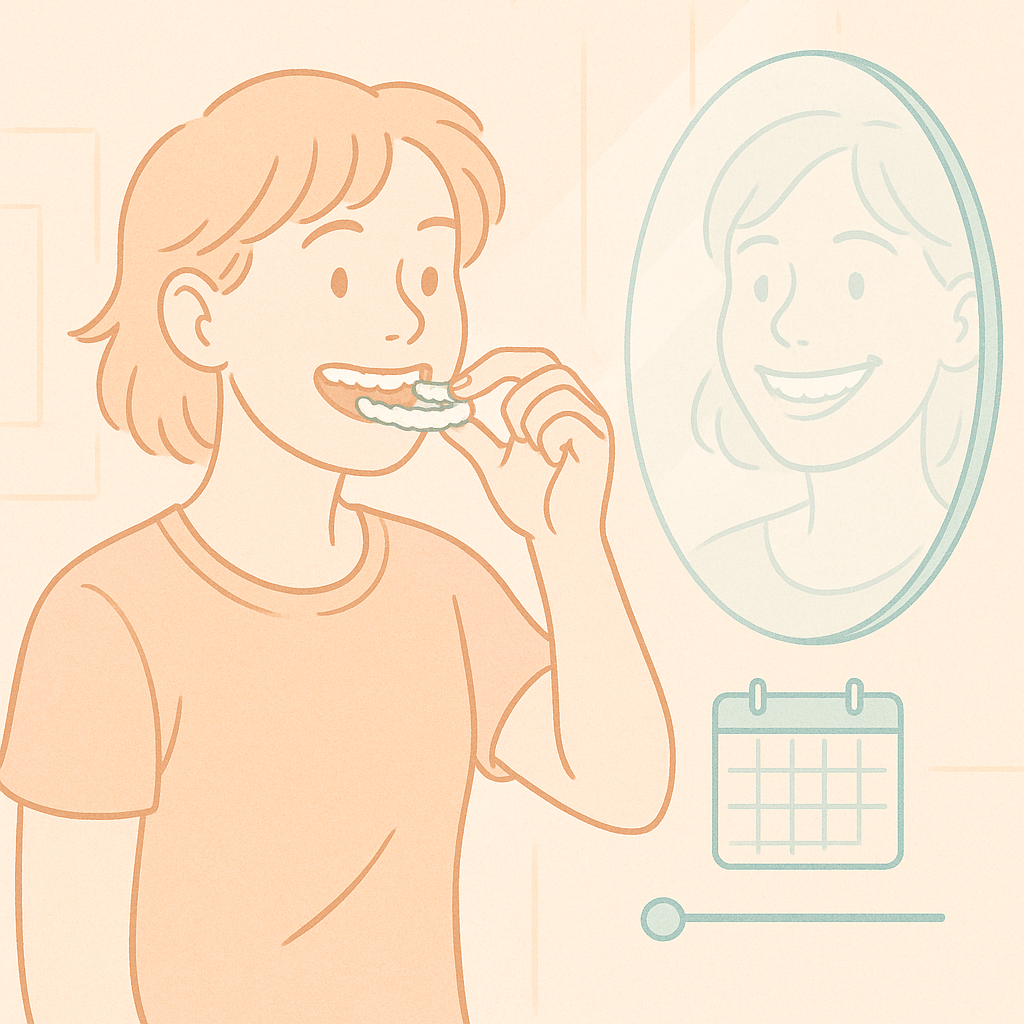
Clear aligners work best when worn consistently and kept clean. Most tracking issues come from short wear time or trays that are not fully seated.
A consultation with a Palo Alto Invisalign provider helps set a realistic timeline, review attachments or refinements, and plan for retainers at the end.
- Wear aligners 20 to 22 hours each day
- Brush and floss before putting trays back in
- Bring aligners to every checkup for fit checks
Next best step
Want help applying this to your smile?
Here are the most relevant treatment pages for this topic, plus the fastest way to reach the office.